
- Adult ticket
- €9(about $10 / £8)
- Ticket notes
- Adult EUR 9; reduced EUR 7 (eligibility not defined on the page); low-carbon EUR 6; museum + bunker tour EUR 13.50; family pass EUR 27 (2 adults, 3 children over 8); free for children under 8, WWII veterans and the war disabled.
- Opening hours
- May-Aug 9:30-19:00; Mar, Apr, Sep, Oct 9:30-18:00; Feb, Nov, Dec 10:00-17:00; ticket sales end 45 min before closing Closed: January and 25 December
- Season
- February-December
- Time needed
- 1 h 30 min
- Explore Normandy Pass
- Partner EUR 2 off (Cœur de Nacre tourist office)
- Nearest station
- Caen or Bayeux, then bus 101 (Caen) or 121 (Bayeux) to Courseulles Chant des oiseaux, 650 m walk Trains from Paris Saint-Lazare
- By car
- Free car park during opening hours
- Official site
- Official website · Tickets
Prices checked October 28, 2026. Dollar and pound amounts use the exchange rate of October 28, 2026 and are approximate.
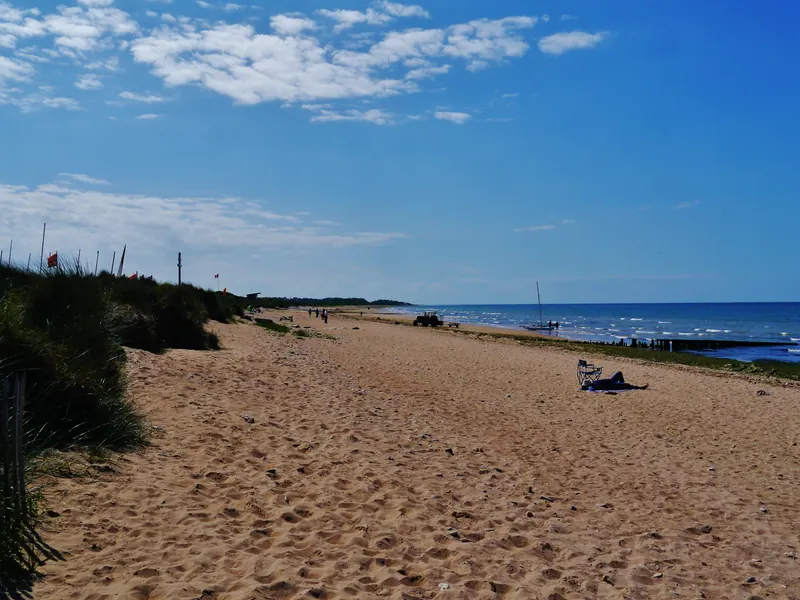

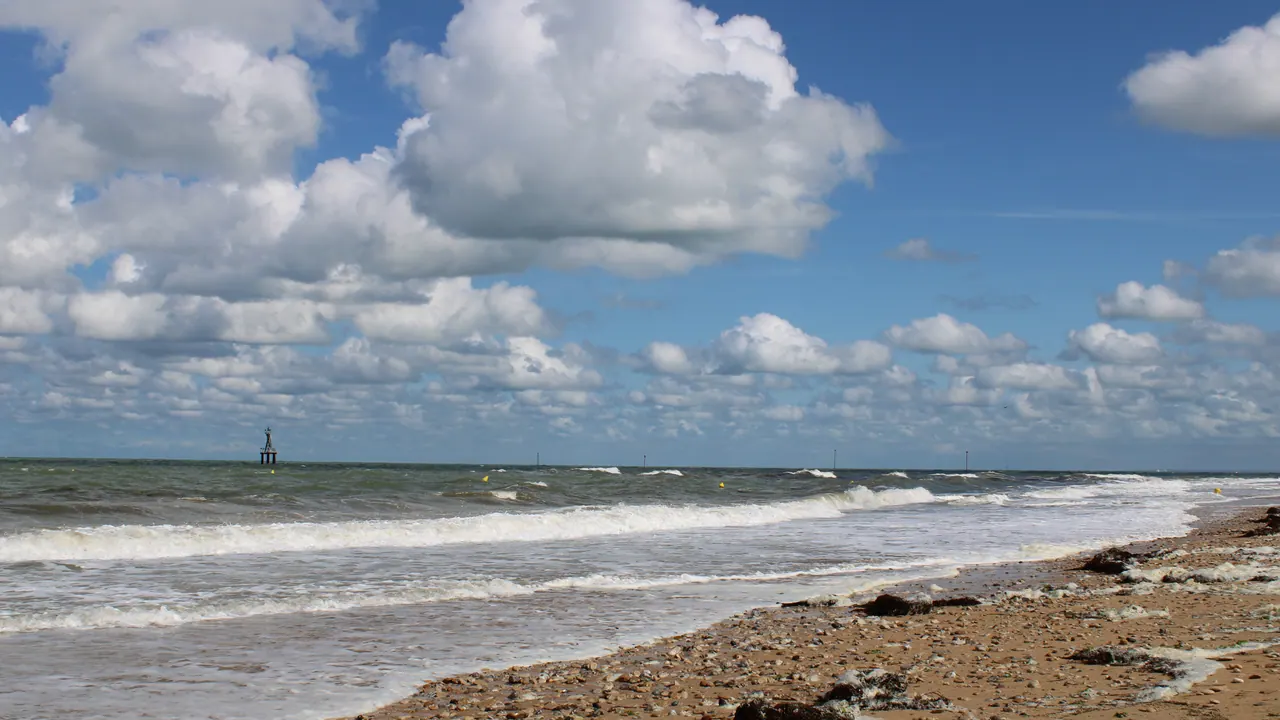
The Juno Beach Centre is Canada’s museum of the Second World War in Normandy, and a cultural center too. It stands on the Juno Beach sector at Courseulles-sur-Mer, and Normandy Tourism calls it the only Canadian museum on the landing beaches. Canadian veterans and volunteers opened it in 2003. It honors the 45,000 Canadians who died in the war, including 5,500 in the Battle of Normandy and 381 on D-Day.
If you have Canadian family ties, or you want the Canadian part of the D-Day story alongside the American and British sites, build this stop into your day on the coast.
What you will see
The Juno sector in brief
Juno was the Canadian landing sector on D-Day. It sat between the British beaches of Gold and Sword and ran from Bernières-sur-Mer to Courseulles-sur-Mer. The 3rd Canadian Infantry Division and the 2nd Canadian Armoured Brigade came ashore here, with the British 48th Royal Marine Commando on their left flank.
Rough seas and offshore reefs held up the first wave. Even so, by nightfall more than 21,000 men had landed and the beachhead reached 12 km inland. Knowing this before you walk in helps the galleries make sense.
Inside the museum
Your visit starts with an introduction from a bilingual Canadian guide, followed by a short film. The film, “They Walk With You”, runs 12 minutes and is shown at 15, 30 and 45 minutes past the hour. Plan to arrive a few minutes before a screening so you are not left waiting.
The permanent galleries then follow Canada’s war effort both at home and overseas. It covers far more than the landings themselves.
After the permanent galleries comes a temporary exhibition, which changes over time, and a closing section on Canada today. The whole visit is on the ground floor.
If you prefer to go at your own pace, an audio guide plays on your own phone. It comes in French, English, Dutch, German, Italian and Spanish. Check the official Juno Beach Centre site for the current charge.
The bunker tour in Juno Park
Juno Park holds German bunkers. Guided tours of these bunkers run from April to October and last 45 minutes. You book them as an add-on to museum entry.
Standing in the bunkers and looking out at the beach the Canadians crossed puts the galleries in context.
Explore Juno for children
Families can use “Explore Juno”, an area with displays adapted for younger visitors and digital games. It gives children a way into a heavy subject.
Planning your visit
Allow at least 1 hour 30 minutes for the museum. Give yourself longer if you want to see the temporary exhibition properly. If you add the 45-minute bunker tour, plan on most of a half day here.
The season runs from February to December. If the bunkers matter to you, come between April and October. For opening hours, closing days and the time ticket sales stop, see the Visit facts box above.
Tickets are sold both at the door and online.
A few ticket points are worth knowing before you go:
- Entry is free for Second World War veterans and widows, the war disabled and accompanied children under 8.
- A family pass covers up to two adults and three children over 8.
- A low-carbon rate applies if you show a train ticket to a Normandy station from the past month or a same-day NOMAD Car bus ticket. A photo of your bike in the center’s bike park also qualifies.
See the Visit facts box above for every price.
The center is a partner of the Explore Normandy Pass, the official pass of Normandie Tourisme, the regional tourism board. The Visit facts box above shows the discount that applies here, and the Normandy pass calculator lets you add up entry prices for the sites you plan to see. My Normandy Pass is an independent guide. It is not affiliated with Normandie Tourisme or the official Explore Normandy Pass.
Accessibility
The museum visit is on the ground floor, with one room on a slight slope. Benches and chairs are placed along the route, and staff can help if you need it. The center offers free magnifiers, a Braille map and noise-cancelling headsets, plus a web app with adjustable text size. Assistance dogs are welcome. The bunker tour is not accessible to wheelchair users.
Fitting it into your trip
The Juno Beach Centre sits between the British beaches of Gold and Sword, so it works well on a day that runs from the British beaches toward the American ones. The One Day on the D-Day Beaches and Two Days in Bayeux and on the D-Day Beaches itineraries show how to string sites together. For background before you go, read D-Day and the Battle of Normandy or open the D-Day beaches map.
Getting there
By train and bus
Take the train from Paris Saint-Lazare to Caen or Bayeux. From Caen, take bus line 101. From Bayeux, take line 121. In both cases, get off at the stop “Courseulles-sur-Mer: Chant des oiseaux”, then walk 650 m, about 8 minutes, to the center.
Keep your train or bus ticket, because it can qualify you for the low-carbon rate. Taxis also run from the station. Check the official site for typical fares. For more on touring without a car, see Normandy Without a Car.
By car
The center has a free car park for cars, camper vans and coaches during opening hours. It also has 2 EV charging points and a bike shelter. The address is Voie des Français Libres, 14470 Courseulles-sur-Mer.
By tour
If you are joining a guided tour of the beaches, ask the operator whether the itinerary includes the Juno Beach Centre and the bunker tour.
Nearby
The driving times below are estimates from route planning and do not account for traffic.
- Arromanches D-Day Museum is about 13 km away, roughly a 17-minute drive. It tells the story of the artificial harbor built off the British beaches, which pairs naturally with the Canadian landing story.
- Caen Memorial Museum is about 20 km away, roughly a 25-minute drive. It covers the wider war and the Battle of Normandy, so it suits a morning before you head to the coast.
- Bayeux is about 22 km away, roughly a 27-minute drive. It makes a practical base for the beaches, with the bus link to Courseulles-sur-Mer.
Frequently asked questions
How long do you need at the Juno Beach Centre?
Allow at least 1 hour 30 minutes for the museum. Add time for the temporary exhibition and for the 45-minute bunker tour if you take it.
Can you visit the German bunkers at Juno Beach?
Yes. Guided bunker tours in Juno Park run from April to October and last 45 minutes. The tour is not accessible to wheelchair users.
Is the Juno Beach Centre free for veterans?
Entry is free for Second World War veterans and widows, the war disabled and accompanied children under 8. See the Visit facts box above for other ticket types.
How do you get to the Juno Beach Centre without a car?
Take the train to Caen or Bayeux, then bus line 101 from Caen or line 121 from Bayeux to the Courseulles-sur-Mer: Chant des oiseaux stop. From there it is a 650 m walk, about 8 minutes.
Is the Juno Beach Centre open all year?
The season runs from February to December. See the Visit facts box above for opening hours and closing days.
Is the Juno Beach Centre visit available in English?
A bilingual Canadian guide introduces the visit. An audio guide you play on your own phone is also offered in English and five other languages.
Sources
- Juno Beach Centrechecked October 28, 2026
- Accessibility : Juno Beach Centrechecked October 28, 2026
- Practical Information : Juno Beach Centrechecked October 28, 2026
- Juno Beach, D-Day Landing Beaches – Normandy Tourismchecked October 28, 2026
- Juno Beach Centre - Normandy Tourism, Francechecked October 28, 2026
- Discounts for Visiting the D-Day Beaches - Réductions D-Day : musées et visites pas chèreschecked October 28, 2026
- The Explore Normandy Pass - Normandy Tourism, Francechecked October 28, 2026
- OSRM driving-time estimates (OpenStreetMap data, no traffic)checked October 28, 2026